The Anti-Algorithm Home: Designing for Life, Not a Trend
Sep 01, 2026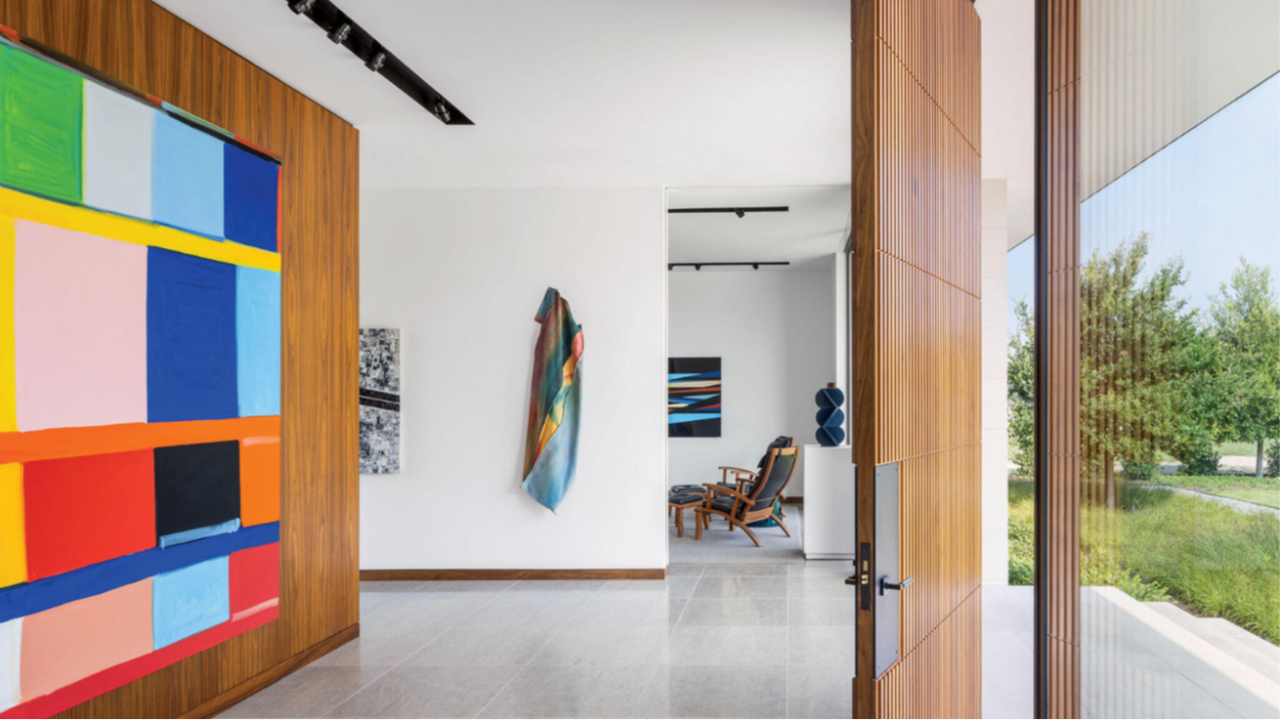
Photo via Luxe Source
We have never had more access to beautiful design—or more temptation to replicate it.
With a few clicks, we can see the world’s most extraordinary interiors, save what speaks to us, and bring nearly any look into our own homes. A residence in Paris can inspire us over morning coffee, a kitchen in Los Angeles can be saved by lunch, and a sofa seen in a Manhattan penthouse can be purchased before dinner. The possibilities are extraordinary. But there is a curious consequence… When everyone has access to the same inspiration, even the most beautifully designed homes can begin to look remarkably alike.
This is how luxury acquired an algorithm.
Certain materials, silhouettes, palettes, and objects began appearing again and again—not because they were necessarily right for the people living with them, but because they had become recognizable markers of what a beautiful home was supposed to look like. The same white oak floors, sculptural chairs, limewashed walls, oversized pendants, and perfectly styled shelves began appearing from one home to the next. Inspiration could quietly become imitation. A home could be impeccably executed, filled with exceptional things, and still feel strangely disconnected from the life unfolding inside it.
I believe the most compelling direction in luxury residential design is a return to something more personal – Homes that are not designed to reflect what is trending, but to reveal who lives there. Not just their taste, but their rituals, their passions, the way they entertain, retreat, gather, work, read, restore, and move through their days. And, importantly, how they want to live in the years ahead.
Because the most enduring luxury is not a home that looks current. It is a home that continues to feel unmistakably yours. It is a home designed around a life—and a life that will continue to evolve.
This is where the Anti-Algorithm Home becomes a conversation about longevity.
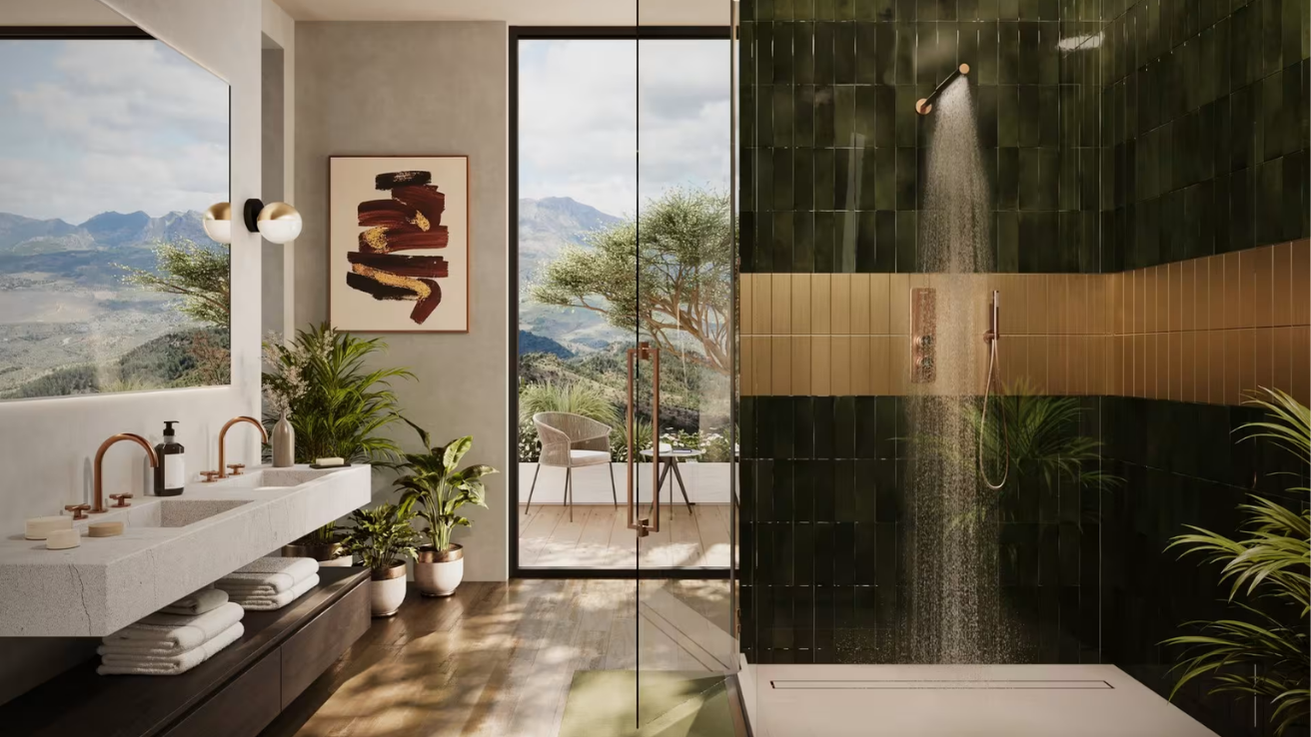
Photo via Graff Designs
Longevity in residential design is often mistaken for aging in place. That is too small an idea.
Longevity is not about designing a home around what you may eventually lose. It is about protecting what you want to keep. Your independence, your energy, your rituals, and your ability to travel, entertain, cook, collect, create, retreat, welcome grandchildren, spend time outdoors, and gather the people you love.
For our clients, the question isn’t, “What will I need when I am older?” It is, “How do I want to live—and how can my home help me keep living that way?”
That question changes the design process completely. We begin with the life, not the look.
How does your morning begin? Where do you naturally gather? How do you entertain? What do you reach for every day? Where do you retreat? What makes you feel restored? We want to know about the ancestral chest with deep provenance, a thirty-year curation of rare acquisitions, and the dining table that somehow needs another place every Thanksgiving.
And then we look beneath the obvious. Where does the home create unnecessary effort? What could feel easier? Where does the light need to change? How do you move through the house at night? What would make cooking, dressing, bathing, entertaining, working, or simply being at home feel more effortless?
Because the most important information about a home rarely appears in an inspiration photograph. It lives in the life of the person who inhabits it.
Individuality Is Where Longevity Begins
A trend eventually changes, but what’s important to you has a lasting resonance.
That is why the most enduring homes begin with something no trend can provide… personal meaning.
The painting you brought home from a trip does not become irrelevant because the color of the year changes. An heirloom does not lose its value because a new furniture silhouette appears. A kitchen designed around the way you actually cook does not suddenly become wrong because another finish has taken over the design world.
Personal things age differently. They gather meaning.
This is why individuality and longevity are inseparable. When a home is rooted in your experiences, habits, relationships, collections, and aspirations, it does not need to be reinvented every few years to remain relevant. It simply evolves with you.
Bespoke craftsmanship makes that possible in ways mass-produced design cannot. Custom millwork can be created around a collection. A dining table can be commissioned for the precise way a family gathers. Tailored upholstery, artisan lighting, hand-applied finishes, and one-of-a-kind furnishings can solve for a particular room, person, or ritual rather than asking the homeowner to adapt to whatever happens to be available.
These things are not valuable merely because they are expensive. They are valuable because they belong.
Perhaps that is the more enduring definition of luxury: not owning the rarest thing, but knowing that everything in your home has a reason to be there.
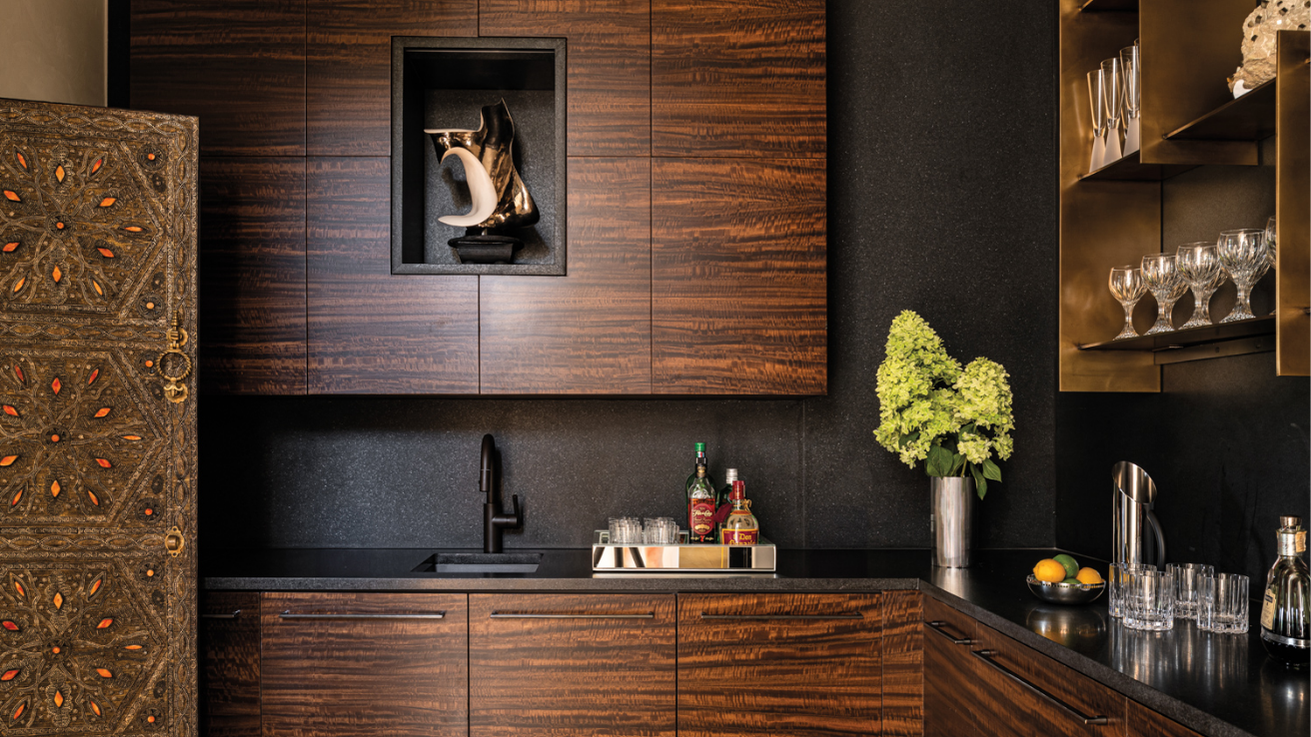
Photo via Luxe Source
The Home Should Feel as Good as It Looks
Personalization cannot stop at what the eye sees. A truly considered home responds to the person living inside it—not only aesthetically, but physically, emotionally, and intuitively.
This is where the most sophisticated longevity design becomes almost invisible.
A hallway that feels generous also makes movement effortless. A curbless shower feels like a private spa rather than an accommodation. Deep drawers place cookware where the hand naturally reaches rather than requiring someone to bend and search through cabinetry. Appliances can be positioned at thoughtful heights. Lighting can change with the rhythms of the day. Window treatments can respond quietly. Technology can manage the environment without constantly requiring attention.
Nothing announces, “This was designed for the future.” It simply feels extraordinarily good.
The best longevity design does not look like longevity design. It feels like a home that somehow understands what you need before you have to ask.
That is the difference between designing for limitation and designing for vitality. We are not interested in asking, “What might you someday be unable to do?”
We would rather ask: “What do you never want to stop doing?”
Then design for that.
Remove What Gets in the Way of Living
Most homes have friction. Not dramatic problems, but small ones: the cabinet that requires an awkward reach, the appliance that makes you bend every morning, the dark hallway at night, the chair that interrupts circulation, or the technology that was supposed to simplify your life but somehow requires three remotes and an app.
We learn to live around these things. And because we have lived with them for years, we stop seeing them.
But small frustrations repeated every day become part of how a home feels.
Exceptional design asks a different question: What can we make disappear?
The unnecessary step. The awkward reach. The glare. The complicated control. The poorly placed switch. The furniture that forces you to navigate around it rather than move naturally through the room.
Thoughtful design removes that effort wherever possible. The most frequently used objects can be placed where the hand naturally reaches. Lighting can respond to the body’s rhythms throughout the day while providing greater visibility where it is needed. Technology can quietly manage comfort, security, climate, and window treatments in the background. Circulation can be considered before furnishings are selected so movement feels natural rather than negotiated.
When these things are resolved, something remarkable happens: you don’t notice the design. You notice that life feels easier.
Dinner flows. Morning feels calmer. Moving through the house feels natural. The bedroom feels restorative. The terrace becomes an effortless extension of the living space.
That is not convenience for convenience’s sake. It is the return of your time, energy, and attention to the things that matter.
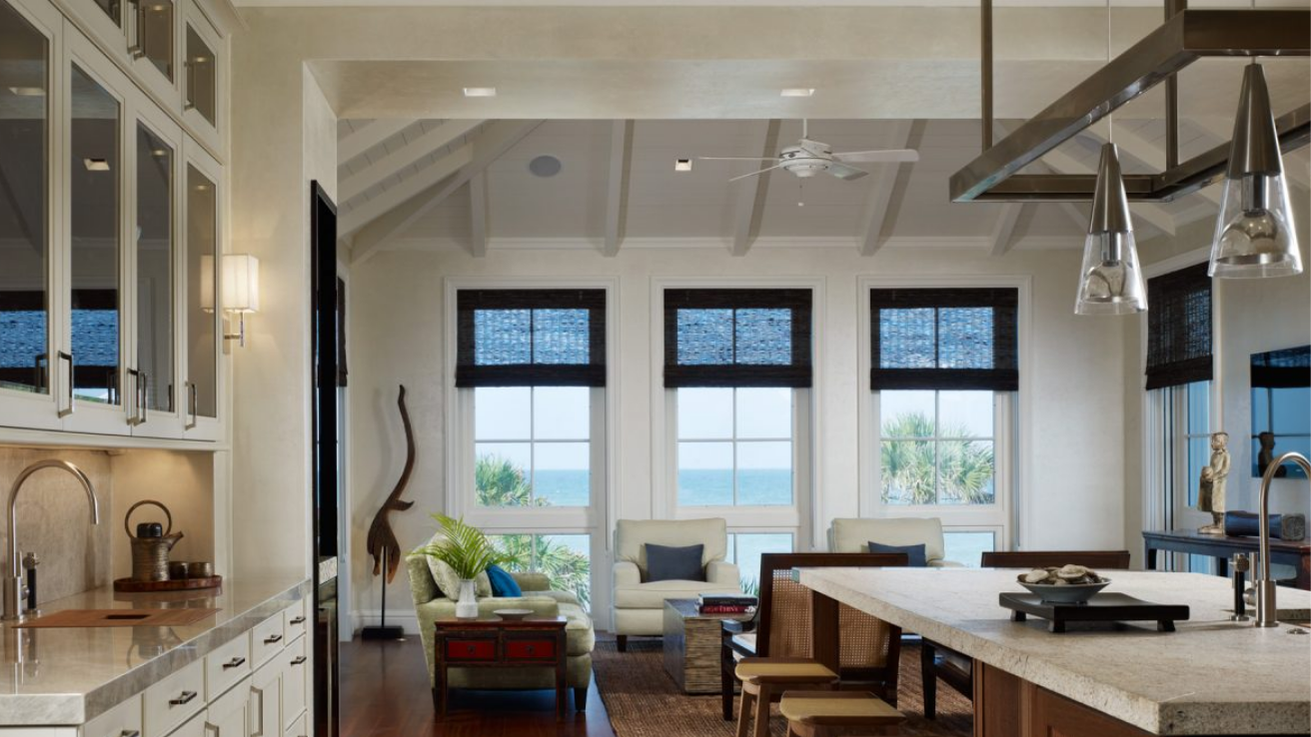
Photo via Deguilio Designs
A Home Should Have Room for the Life You Haven’t Lived Yet
The most beautiful homes feel alive and open to grow and evolve.
A home should have room for another painting, another chair, another collection, another generation around the table. A contemporary painting might eventually find its place above an heirloom chest. A sculpture discovered years after the renovation might become the piece that completes a room. A beloved chair might be reupholstered for another twenty years rather than discarded because it has become part of the family’s story.
This is what makes a collected home different from a decorated home. It has a past—and it has a future.
We cannot know exactly who you will be twenty years from now. And we don’t need to. Instead, we can create a home with enough intelligence, restraint, beauty, and flexibility to evolve as you do.
Because your home should not be a finished statement about who you were when it was designed. It should be a place that keeps making room for who you are becoming.
Timelessness Is Not a Look
We often mistake timelessness for an aesthetic: neutral colors, classic materials, traditional architecture, or pieces that have already survived several design cycles. But a room does not become timeless because it looks like it could have been designed twenty years ago.
It becomes timeless because it still matters twenty years from now.
A kitchen that makes you want to cook remains relevant. A bedroom that helps you restore remains relevant. A room that brings your family together remains relevant. Beautiful materials selected for health and enduring performance remain relevant. A home that makes movement easier, connection richer, and everyday rituals more pleasurable becomes more valuable with time—not less.
This is also why embracing innovation does not mean chasing the newest thing. Technology, wellness, lighting, air quality, automation, and new materials can profoundly improve the experience of home when they are used with intention.
The goal is not to showcase technology. It is to make life better.
Innovation should support the larger story of the home rather than become the story itself. Technology should simplify rather than complicate. Wellness should be woven into the experience rather than relegated to a dedicated room. Ergonomics should feel like elegance rather than adaptation.
Innovation should serve the life. Never the other way around.
A truly enduring home can embrace the future without becoming a monument to the moment in which it was created.
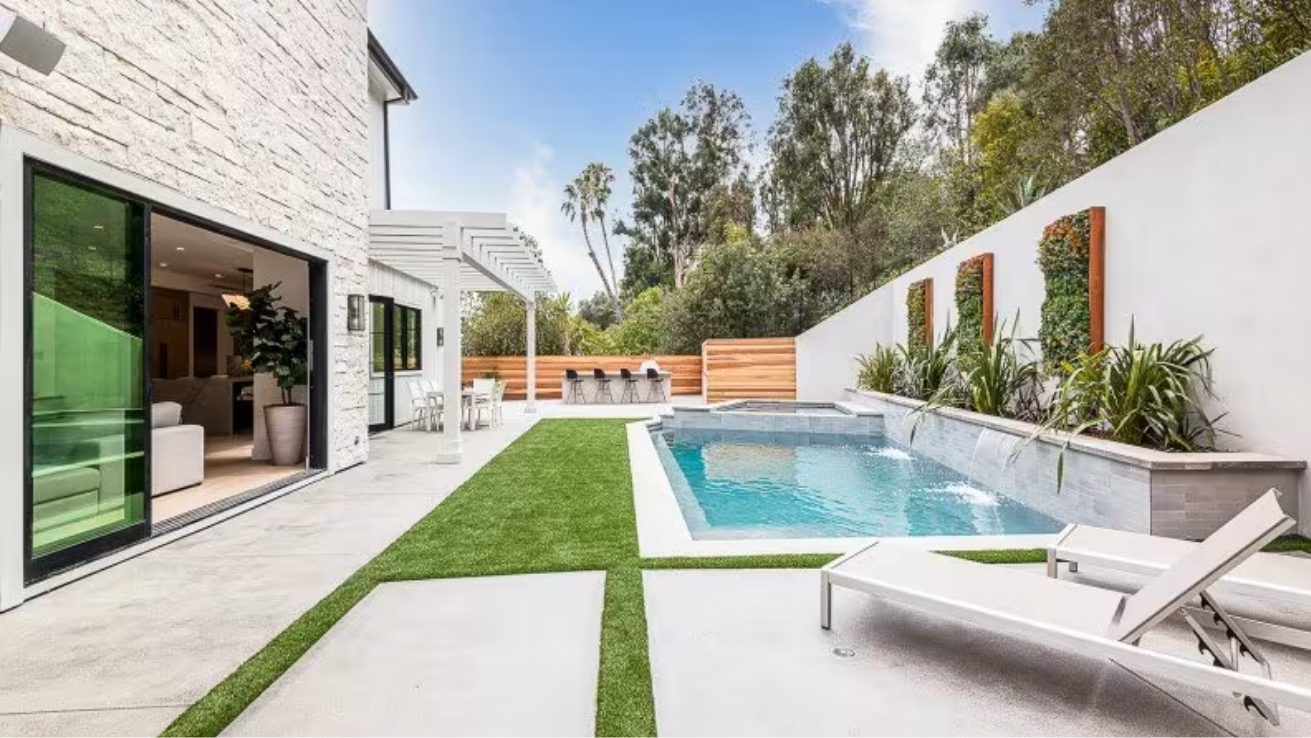
Photo via Graff Designs
The New Luxury Is a Home That Knows You
Perhaps this is the real promise of the Anti-Algorithm Home.
It is not a rejection of beautiful things, trends, or technology. It is a rejection of the idea that luxury should be recognizable before it is personal.
The most sophisticated home does not need to announce what it cost. It does not need the sofa everyone knows, the finish everyone is specifying, or the room everyone is saving on Pinterest. It can be quieter, more layered, and more intimate. It can hold a life inside it.
Your history alongside your future. Your collections alongside new discoveries. Beauty alongside extraordinary function. Technology alongside craftsmanship. Spaces for connection alongside places for solitude.
And the best details may be the ones no guest ever notices, because they were never designed for the guest. They were designed for you.
That is where individuality becomes something far more meaningful than personal style. A truly personal home understands your rituals, your relationships, your collections, your aspirations, your body, your energy, and the life you want to continue living.
It gives you something extraordinarily valuable: the freedom to live beautifully—and to keep doing so.
At Jett & Company, this is how we think about Luxury Longevity Design. We believe a truly exceptional residence should do more than surround you with beauty. It should support the privilege of living exceptionally well—today, tomorrow, and through every chapter ahead.
After years of algorithm-driven sameness, the new luxury is a home that anticipates the rhythms of daily life and continues to elevate them.
It is a home designed for a lifetime of vitality, longevity, and exceptional living. If you’re ready to experience this magnitude of Beauty at Home, book your personal consultation here.
5 Stress Free Steps to Bring Your Dream Home to Life
Inside this free guide, you will receive:
- Everything you need to get it right the first time, with confidence
- Start today! Practical steps to make your dream home a reality
We hate SPAM. We will never sell your information, for any reason.
Author