Gather in Style. Give Them Something to Talk About.
Nov 01, 2026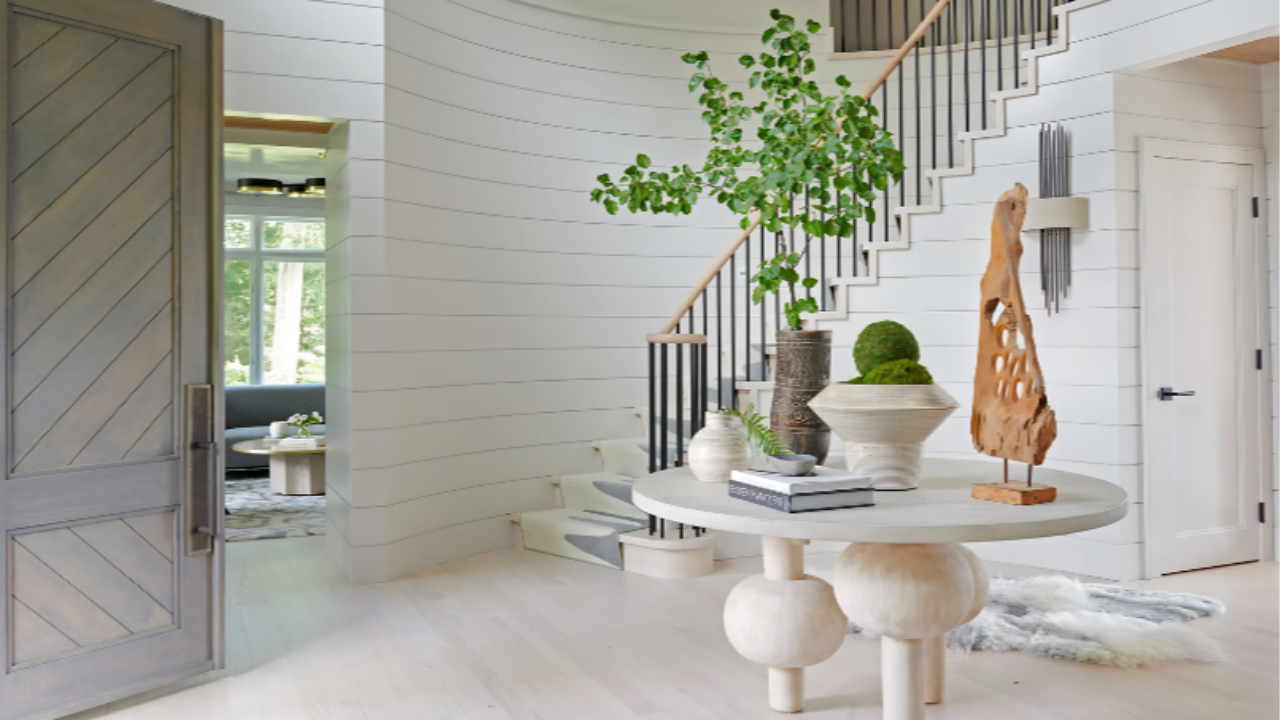
Photo via Architectural Digest
The arrival of the holiday season has a way of changing the rhythm of a home. Rooms that may have spent much of the year quietly accommodating daily routines are suddenly expected to do much more. The kitchen becomes a gathering place as much as a place to cook. Guest bedrooms are occupied again. Dining rooms expand beyond an intimate dinner for two or four. Friends move between the living room and the lanai, grandchildren arrive with all the energy and belongings that accompany them, and the house takes on a fullness that is particularly welcome after the quieter summer months in Naples.
It is also one of the most revealing times to experience your home. During everyday life, we naturally adapt to small inconveniences without giving them much thought. We walk around the chair that interrupts a pathway, know exactly which kitchen drawer is too far from where it is needed, and accept that the beautiful formal room rarely attracts anyone once guests arrive. We have learned how our homes work, including how to compensate for the parts that do not. When the holidays bring more people, more activity and a different pace, those little compromises become much easier to see.
This does not mean the arrival of family and friends should become an exercise in finding fault with your home. Quite the opposite. Entertaining provides a wonderful opportunity to observe what already works beautifully, because the best interior design often reveals itself through ease rather than appearance alone. A thoughtfully designed home allows people to gather comfortably, move naturally and enjoy themselves without requiring the host to continually manage the environment around them. When the design supports the occasion, attention can remain where it belongs, on the people who have gathered there.
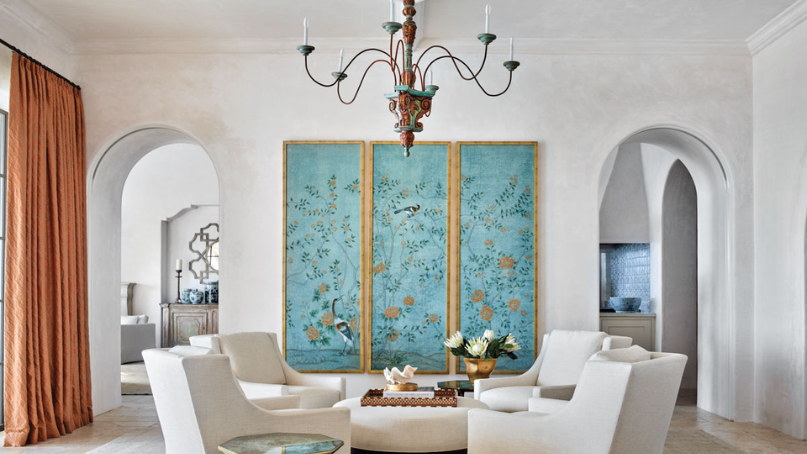
Photo via Luxe Source
The Difference Between a Beautiful Home and One That Lives Beautifully
Luxury interiors are often experienced through photographs, where everything is perfectly arranged and every room exists in a moment of complete stillness. Real homes, of course, are anything but still. They are meant to accommodate people moving through them, food being prepared, doors opening to the outdoors, conversations forming and dissolving, children finding their own corners, and guests settling in for an evening that may last much longer than originally planned.
That distinction is important because a room can be visually exceptional and still not function particularly well when it is being used. A living room may have beautiful furnishings but lack the intimacy required for conversation. A kitchen may have exquisite cabinetry and finishes while creating congestion when several people are preparing food or drinks. An impressive outdoor space may photograph beautifully yet remain surprisingly empty because the seating, lighting or relationship to the interior does not make people want to stay there.
At Jett & Company, we think about the experience of a home alongside its appearance. How people enter a room, where they naturally pause, what they see from one space into another and how comfortably a group can gather are all part of the design. These considerations become particularly apparent during the holidays because the home is operating at a different capacity. Instead of evaluating a room in isolation, you begin to understand how the entire residence performs as one connected environment.
A Home that Considers Every Need, Even the Guests
One of the most interesting things about entertaining is watching where people naturally choose to gather. Hosts may envision cocktails in the formal living room, only to discover that everyone gravitates toward the kitchen. A beautifully furnished sitting area may remain untouched while a smaller, more casual space becomes the center of the evening. In a Naples home, the lanai may unexpectedly become the preferred gathering place, with guests moving outdoors almost immediately and remaining there well after sunset.
Furniture placement can have a similar influence. Seating that is too widely spaced may look appropriately scaled to a large room but make conversation difficult. Conversely, a thoughtfully arranged grouping can make an expansive great room feel intimate without diminishing its sense of openness. Small tables positioned where someone instinctively reaches to place a glass, chairs that can easily turn toward a conversation, and clear pathways between gathering areas are details that may seem minor on a floor plan but become remarkably important when the room is filled with people.
Observing your home while it is being enjoyed gives you information that no empty-room evaluation can provide. Rather than asking how a room is supposed to function, you can see precisely how your family and guests want to use it.
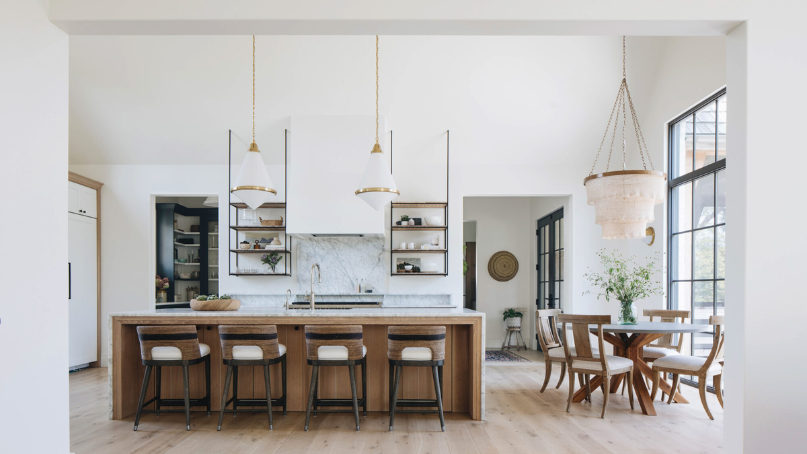
Photo via Luxe Source
Your Kitchen, the Hearth of Gathering
Holiday entertaining puts particular pressure on the kitchen, which has evolved far beyond its original role as a room devoted primarily to food preparation. In many luxury homes today, the kitchen is both a functional workspace and one of the primary social environments. Guests gather around the island, someone opens a bottle of wine while dinner is being prepared, serving pieces appear from cabinets, appetizers are set out, and people move repeatedly between the refrigerator, sink, pantry and adjoining spaces.
A kitchen that functions perfectly well for two people on an ordinary evening can feel entirely different when the house is full. What matters at that point is not simply the amount of space, but how intelligently that space has been organized. A larger kitchen is not necessarily an easier kitchen in which to entertain if every guest still has to cross the primary cooking zone to reach the refrigerator or find a drink.
This is why thoughtful kitchen planning considers different types of activity and the relationships between them. Beverage service, wine storage or a separate bar can create a natural destination away from the cooking area. Generous landing surfaces can accommodate platters and serving pieces without overtaking preparation space. An island can provide both seating and separation, allowing guests to remain part of the conversation while giving the cook room to work comfortably.
The relationship between the kitchen and the rooms surrounding it is equally important. In many Naples homes, entertaining moves fluidly from kitchen to great room to outdoor living area. When those spaces have been considered together, the transition feels natural. When they have been designed independently, bottlenecks and awkward moments tend to emerge. The holidays often provide the clearest opportunity to see which version exists in your own home.
Hospitality Begins Before Anyone Sits Down
The experience of being welcomed into a home begins long before dinner is served. Entryways, circulation paths, powder rooms and other transitional areas play an understated but important role in entertaining. They may not receive the same attention as a kitchen or living room, yet they influence how comfortable a home feels from the moment guests arrive.
A well-considered entry provides enough space for several people to arrive without congestion while establishing the character of the home immediately. From there, circulation should feel intuitive. Guests should not have to navigate around furniture to move from one room to another or wonder how to reach the outdoor areas they can see beyond the glass. In larger homes, lighting, artwork and architectural details can subtly guide movement without the environment ever feeling overly prescribed.
These in-between spaces are also where thoughtful design often distinguishes itself. A console positioned at precisely the right scale, an art piece that creates a visual destination at the end of a hallway, or lighting that connects one room to the next can make the entire residence feel more cohesive. None of these decisions announces itself as particularly important during an evening with friends, yet collectively they contribute to the feeling that the home simply works.
That sense of effortlessness is one of the most sophisticated forms of luxury. It is not about filling a home with more features. It is about anticipating needs so naturally that the solutions almost disappear.
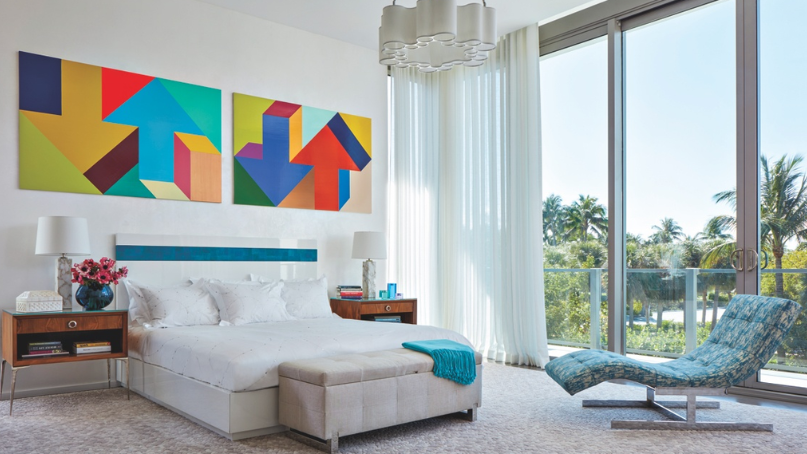
Photo via Luxe Source
Thoughtful Comfort is the Ultimate Luxury
The holidays also give guest suites an opportunity to fulfill their intended purpose. A room that looks perfectly complete when unoccupied can feel very different once someone is actually living in it for several days. Suddenly, practical considerations become as important as beautiful bedding and furnishings.
A truly welcoming guest room allows someone to settle in rather than simply sleep there. There should be an intuitive place for luggage, enough accessible storage to unpack, convenient charging locations, comfortable bedside lighting and a chair or bench that serves a purpose beyond completing the composition of the room. Window treatments should provide genuine privacy and allow guests to control the morning light, while bedding should be chosen with the same consideration for comfort that is given to color and texture.
The adjoining bath deserves the same thought. Good lighting, usable counter space, accessible towels and a sense of privacy all contribute to the experience. These details are particularly important when adult children, grandchildren or longtime friends return regularly. The guest suite becomes more than an occasional room; it becomes part of the way the home supports relationships.
There is something deeply luxurious about entering a room and feeling that your presence has been anticipated. It does not require excess. In fact, the most gracious guest spaces are often relatively restrained. Their luxury comes from thoughtful decisions that allow someone to feel immediately comfortable and cared for.
Lighting Sets the Tone for the Entire Evening
Holiday gatherings also remind us that a home designed primarily in daylight has only been partially designed. In Naples, where sunlight is such an important part of the architectural experience, it is easy to focus on how rooms look during the day. Yet much of the entertaining that defines the season takes place after sunset, when lighting becomes one of the most influential elements in the home.
Successful lighting is layered. Architectural lighting provides necessary illumination, while decorative fixtures introduce personality and visual interest. Lamps bring warmth to seating areas, art lighting highlights pieces worth noticing, and carefully considered exterior lighting extends the view beyond the windows after dark. Dimmers allow the atmosphere to shift as the evening progresses, moving from the practical lighting needed during preparation to something softer and more intimate once guests have settled in.
This becomes especially important in open-concept homes. If the kitchen, dining and living areas are visually connected, each space needs enough independence to create its own atmosphere without feeling disconnected from the others. The goal is not uniform brightness. It is balance.
The same principle extends outdoors. Once the landscape beyond the windows becomes a black void, an interior can suddenly feel smaller. Thoughtful exterior and landscape lighting preserves visual depth and allows outdoor spaces to remain part of the experience long after sunset. In a Naples residence, where the relationship between indoors and outdoors is so central to the lifestyle, that continuity can transform an evening.
Where the Magic of Entertaining Happens Between Indoors and Out
One of the pleasures of the holiday season in Southwest Florida is that entertaining is not confined by winter weather in the way it is elsewhere. Thanksgiving cocktails can happen beside the pool. Dinner guests can move between the great room and lanai. A holiday evening may begin inside and end outdoors several hours later.
For that reason, outdoor living areas deserve the same design consideration as their interior counterparts. A collection of attractive outdoor furniture does not necessarily create a space people want to use. Comfort, scale, shade, lighting, traffic flow and proximity to food and drinks all influence whether guests naturally move outside and remain there.
The visual connection matters as well. In homes with large expanses of glass or sliding doors, outdoor spaces are constantly visible from the interior. The lanai, pool and landscape therefore become part of the composition of the rooms inside. Materials, furnishings and colors do not need to match, but they should feel as though they belong to the same larger story.
When indoor and outdoor spaces are designed together, entertaining becomes fluid. Guests are not moving from the “finished” part of the home to an exterior afterthought. They are simply moving into another room, one that happens to be under the Florida sky.
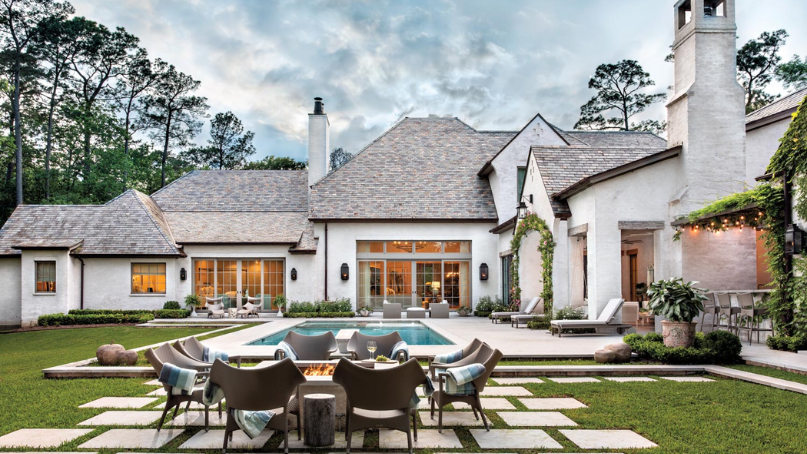
Photo via Luxe Source
The Best Homes are Designed Around the People Who Live in Them
The most memorable holiday homes are rarely memorable because everything was perfect. We remember the people who were there, the meals that stretched late into the evening, the unexpected conversations and the traditions that seem to find their way back year after year.
Interior design cannot create those memories, but it can create an environment in which they happen more easily.
That is ultimately why functionality matters so much in a luxury home. Beautiful materials, custom furnishings, art and architectural details all contribute to the experience, but their purpose is not simply to be admired. They should support a home that is being lived in fully.
When seating encourages people to linger, when the kitchen accommodates both cooking and conversation, when a guest room makes someone feel genuinely welcome and when the transition to outdoor living feels effortless, design becomes part of the hospitality rather than simply its backdrop.
As the holidays unfold this year, enjoy your home, but also allow yourself to notice it. Pay attention to where people gather, where the evening flows naturally and where something feels more complicated than it needs to be. Notice the spaces that come alive when the house is full and the ones that remain unexpectedly quiet.
Those observations can tell you far more about what your home needs than any passing design trend ever could.
At Jett & Company, we believe the most successful interiors are not simply beautiful when everything is perfectly arranged. They are designed to remain beautiful while life is happening inside them. If this holiday season has you seeing new possibilities for your Naples home, a personal consultation is an opportunity to explore how thoughtful design can make the seasons ahead feel even more effortless.
5 Stress Free Steps to Bring Your Dream Home to Life
Inside this free guide, you will receive:
- Everything you need to get it right the first time, with confidence
- Start today! Practical steps to make your dream home a reality
We hate SPAM. We will never sell your information, for any reason.
Author